
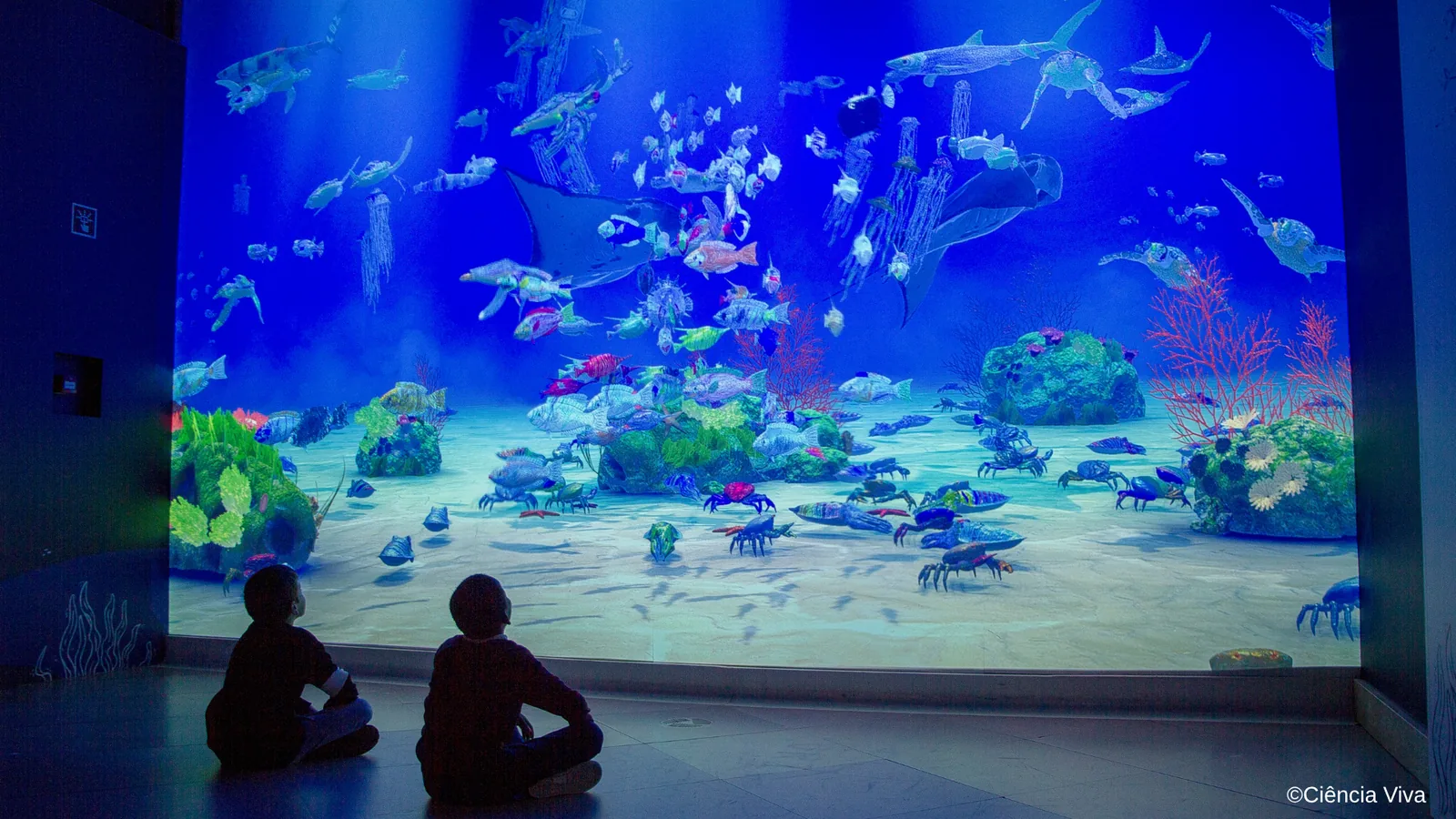
 Follow the shoreline from a rocky pool into deeper water. Near the surface, waves and tides change the conditions animals experience each day. Farther down, the amount of sunlight falls and pressure increases. The Ocean Museum traces that change in depth through the animals that feed, shelter and grow along the way.
Between high and low tide
A rock pool holds water after the sea retreats. Its residents may spend hours in a small body of water that gets warmer in the sun. Salt levels can also change as water evaporates or rain falls into the pool. The next tide brings a new supply of seawater.
Look for how animals stay attached when waves pass over the rocks. Mussels fasten themselves with tough threads made by their own bodies. A sea anemone attaches by its base and extends its tentacles to capture small animals in the water. A change in tide can turn the same patch of rock from a feeding site into a place to wait for the sea to return.
A forest made of kelp
In sunlit coastal water, large brown algae called kelp can grow in stands that provide shelter for fish and invertebrates. Some animals hide among the blades. Others live around the holdfasts, the structures that attach kelp to rock. Look near the base as well as at the canopy to understand where animals find space.
Sea urchins graze on kelp. In parts of the North Pacific, sea otters eat enough urchins to affect how heavily they graze. A change in the number of predators can change the amount of kelp, which alters the shelter available to other animals.
Food in the deep ocean
Some life below the reach of sunlight depends on material drifting down from above. Bits of dead plankton, waste and other particles can sink slowly through the water. This falling material is called marine snow. It supplies food to animals that catch the particles or feed on them after they settle.
At some hydrothermal vents, microbes use energy from chemical reactions to make food. Giant tube worms can host these microbes within their bodies and receive nutrients from them. A cluster of worms around a vent can grow in water that receives no sunlight.
Explore the animals at each depth
When reading about a marine animal, start by finding the depth at which it lives and the food available there. Then look at the shape of its body and the way it moves. The Sharks and Rays gallery continues that approach with fish that hunt along the seafloor or feed in open water.